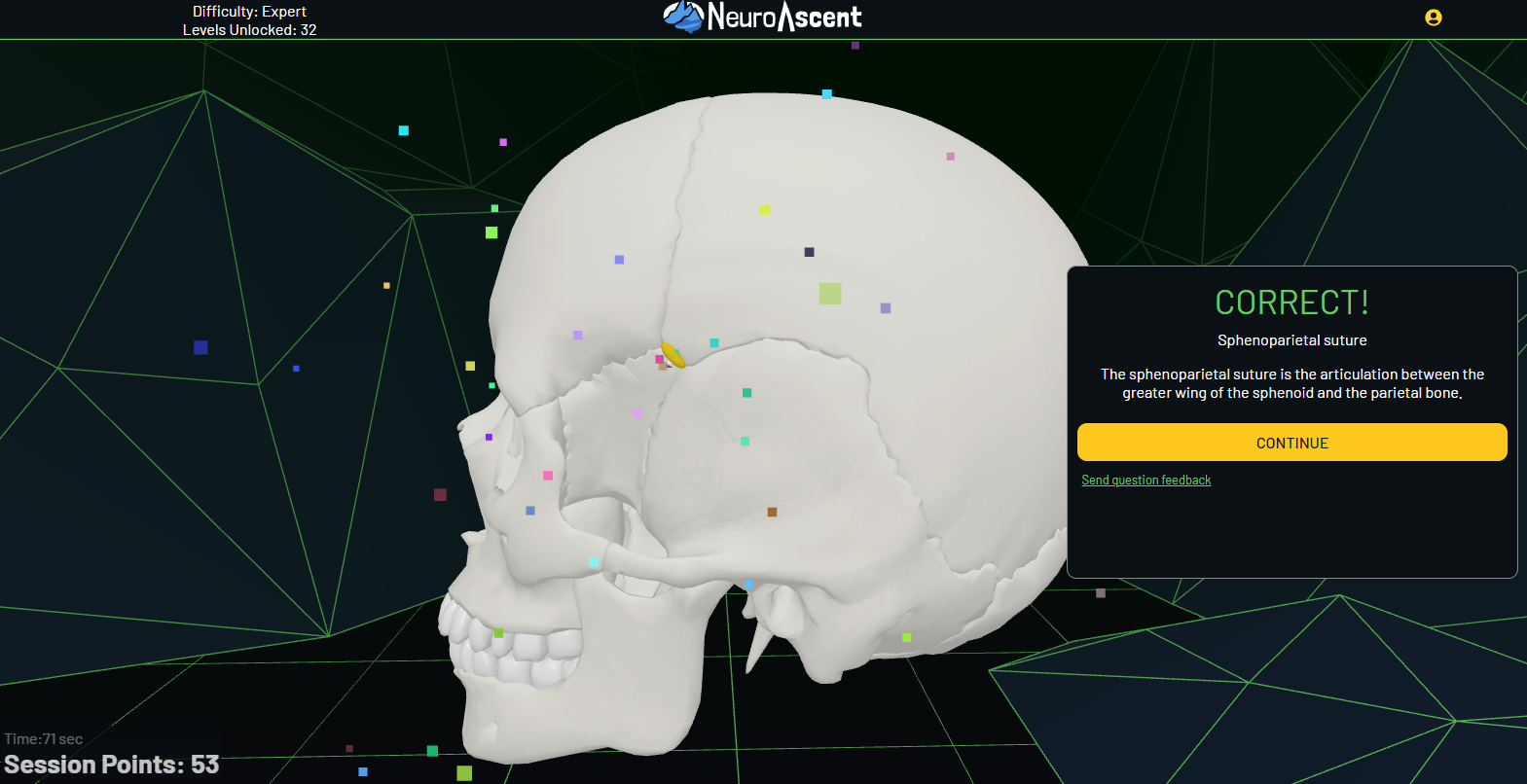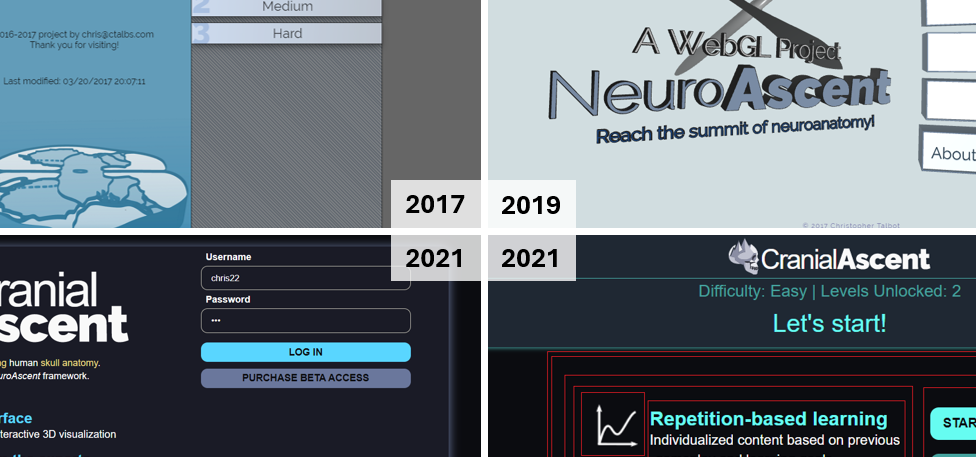
2024 was NeuroAscent’s biggest year yet. We added new levels, new questions, and watched hundreds of users put the platform through its paces. Here’s what the numbers look like.
Content Library
As of late 2024, the platform includes 18 distinct anatomical levels across multiple worlds, with 818 interactive anatomical objects and over 1,900 questions across multiple difficulty tiers (an average of 2.57 questions per object). The content spans three main sections:
- Cranial anatomy with 1,141 questions across 10 levels
- Spine anatomy featuring 191 questions across 4 levels
- Axial spinal cord anatomy containing 621 questions across 4 levels
Educational Depth
The 818 objects span four difficulty tiers: 229 entry-level for undergraduate studies, 246 intermediate aligned with early medical education, 210 advanced for specialized study, and 133 expert-level. The spread is intentional. Students should be able to start where they’re comfortable and keep being challenged as they improve.
User Engagement in 2024
Since our spring 2024 update, 274 new users signed up and 180 of them actively answered questions. Across those users, 6,301 questions were answered with a 70.81% correct response rate. That’s a solid baseline, especially considering many of those attempts are first encounters with unfamiliar material.
2024 Learning Analytics
The learning curves tell the real story:
- First-time encounter with questions: 54.70% accuracy
- By the third encounter: 84.67% accuracy
- By the sixth encounter: 92.26% accuracy
- Perfect scores achieved consistently after 10+ encounters
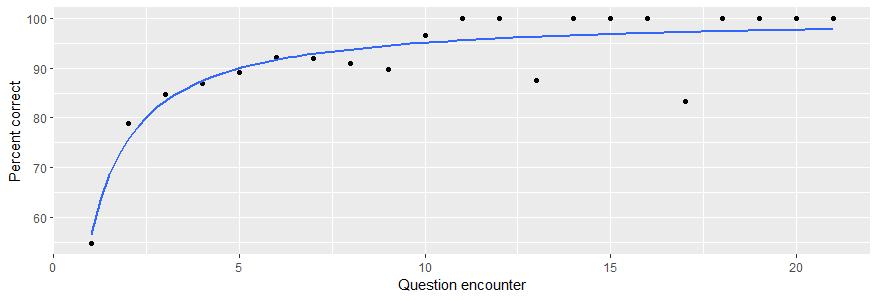
Response accuracy improved with each subsequent encounter users had with questions in 2024.
Average response times also improve with familiarity:
- First encounter: 9.17 seconds
- Second encounter: 5.81 seconds
- Fifth encounter: 4.88 seconds
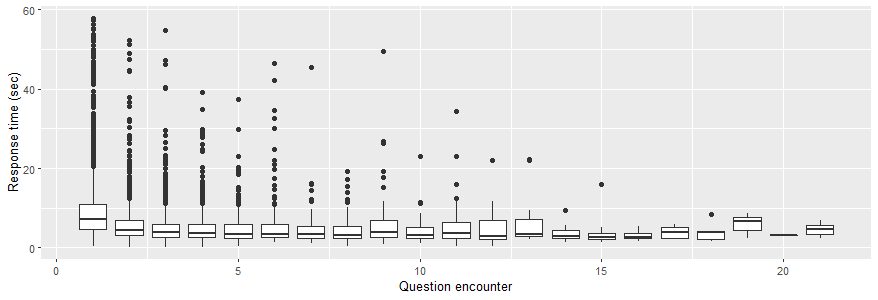
Response speed also improved with each subsequent encounter users had with questions in 2024.
Looking Forward
The accuracy curve is what stands out most. Users go from coin-flip accuracy on first encounter to near-perfect after ten repetitions. That’s spaced repetition doing exactly what it should, and it’s encouraging to see it hold up across hundreds of users with our game-based learning methods.
In 2025, we’re expanding into cortical and brainstem surface anatomy, with three new levels already in development. We’re also refining the algorithm that selects which questions to surface next, based on what we’ve learned from this year’s data.