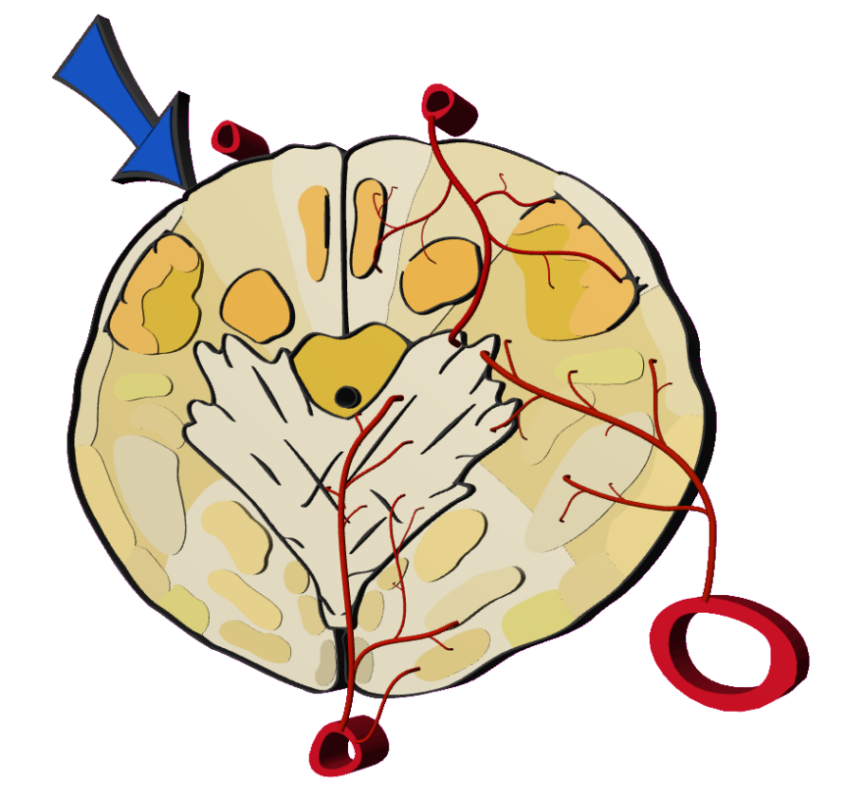
Neuroanatomy, the study of the nervous system’s structure, is one of the most challenging subjects in medical education. From the detailed architecture of the spinal cord white matter tracts to the networks of the limbic lobe, mastering this field means learning dense terminology and memorizing vast amounts of information. But there’s real beauty in it too. Once you understand the structures well enough, you start to see how form predicts function, and that’s what makes it possible to recognize and treat neurological conditions effectively.
Barriers in neurology and neuroanatomy education
Many medical students and healthcare professionals develop “neurophobia”: a fear and avoidance of neuroanatomy and neurology (Jozefowicz, 1994). That anxiety steers people away from the field and, more critically, can affect care quality. In conditions like stroke, seizures, and dementia, rapid recognition changes outcomes. Confidence in neuroanatomy matters.
How NeuroAscent Helps
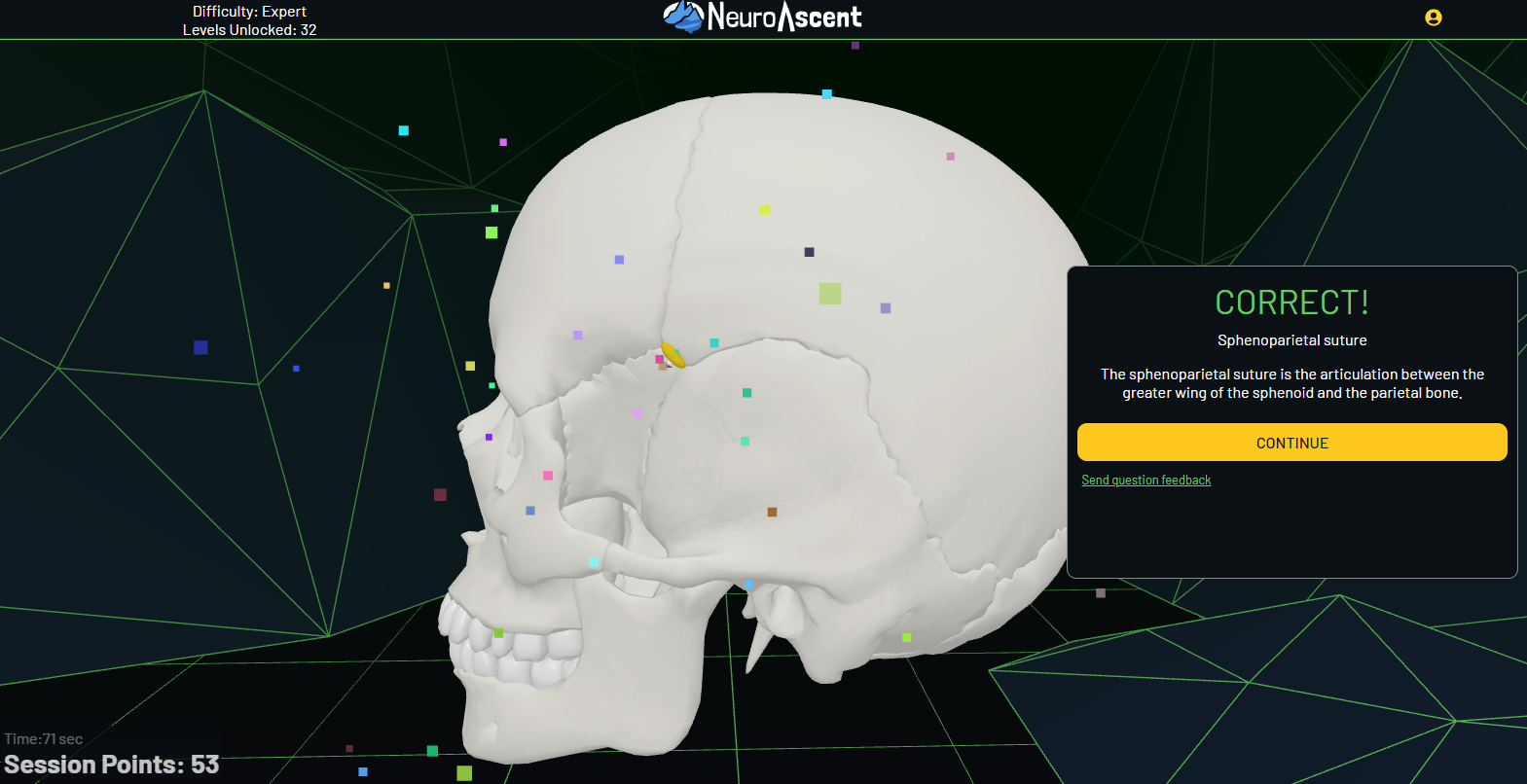
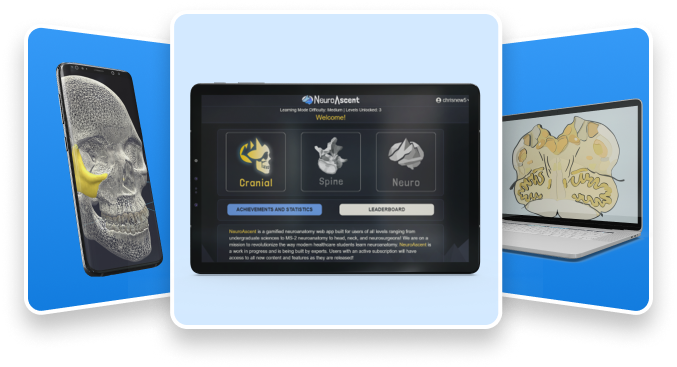
This is where NeuroAscent comes in. We’ve built an interactive learning platform that changes how students engage with neuroanatomy:
- Game-based learning that makes complex concepts accessible
- Spaced repetition algorithms that optimize retention
- Interactive 3D models to study anatomical relationships spatially
- Multiple difficulty tiers, from undergraduate basics to expert-level clinical questions
Early testing and analysis have shown promising trends in our platform performance and fueled continued improvements.
Augmenting traditional education
Textbooks will always be king, and traditional teaching methods will persist. But the world around education is changing. Students are exposed to advanced technology from an early age, and they expect their learning tools to reflect that. Digital tools exist for most medical disciplines, yet neuroanatomy has been notably underserved. NeuroAscent is a passionate effort to fill that gap, not just for future neurologists, but for any provider who needs to recognize and respond to neurological conditions.
Always improving
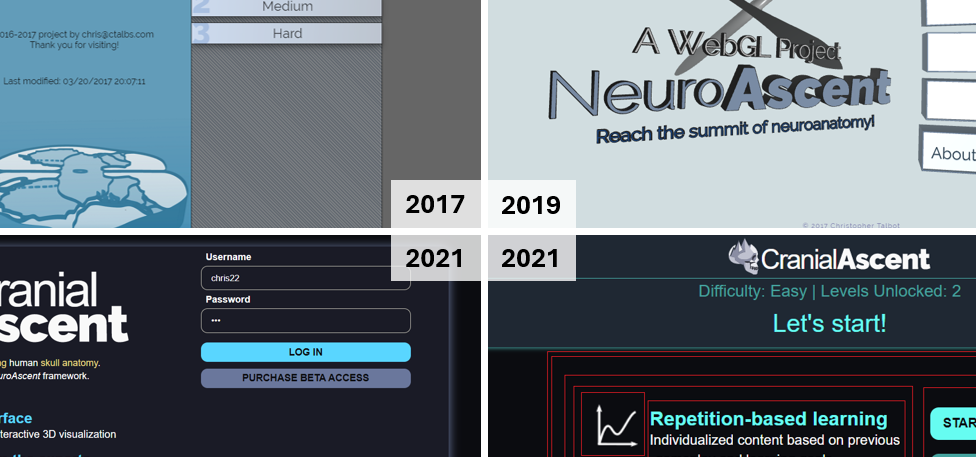
NeuroAscent is a passion project, and it shows in the pace of updates. I’m constantly refining the spaced repetition algorithm, adding new questions, and expanding the 3D model library based on what users tell me is working (and what isn’t).
We’re just getting started. If neuroanatomy education matters to you, try the app.
References
Jozefowicz RF. Neurophobia: the fear of neurology among medical students. Arch Neurol. 1994;51(4):328-329. doi:10.1001/archneur.1994.00540160018003. PMID: 8155008.