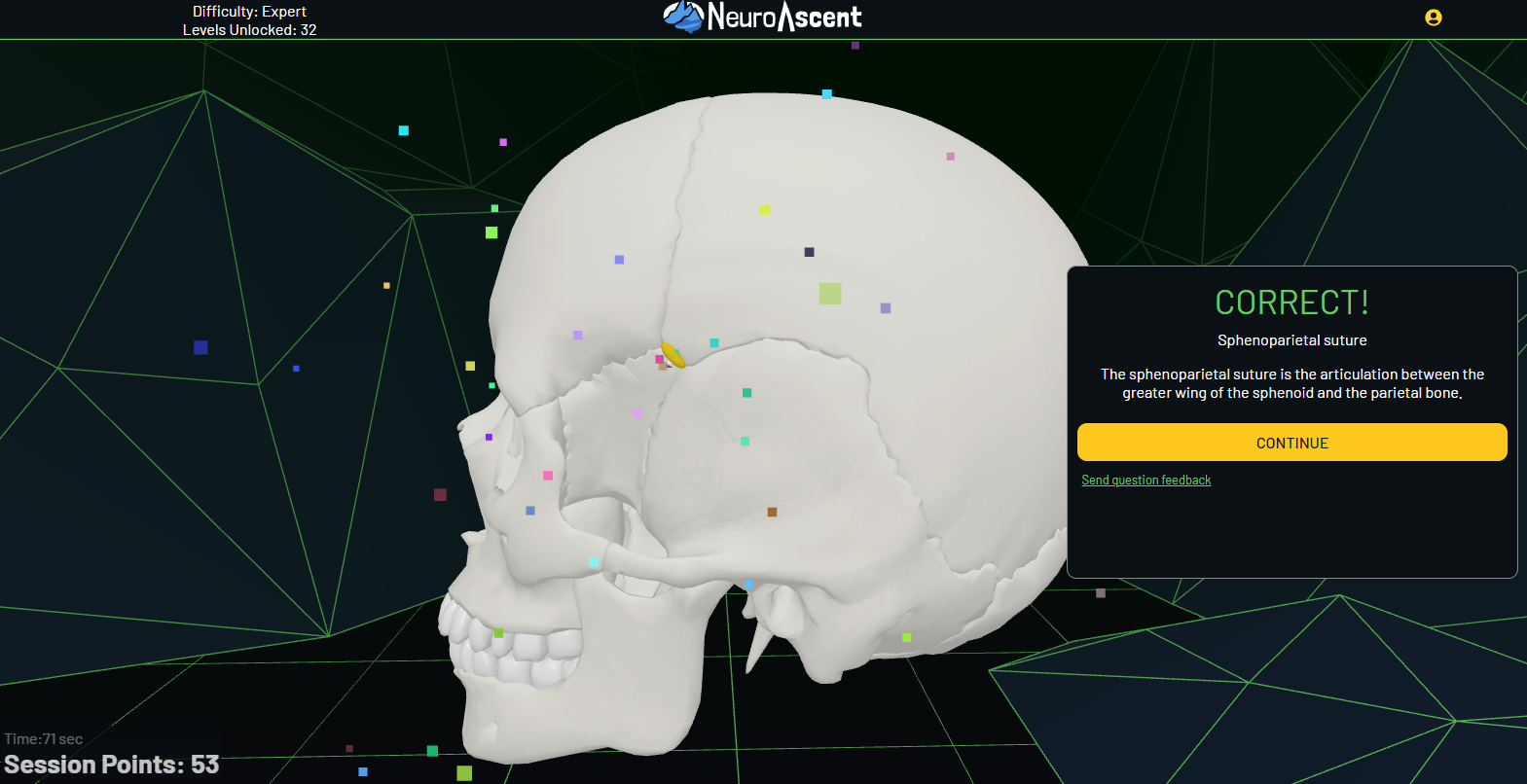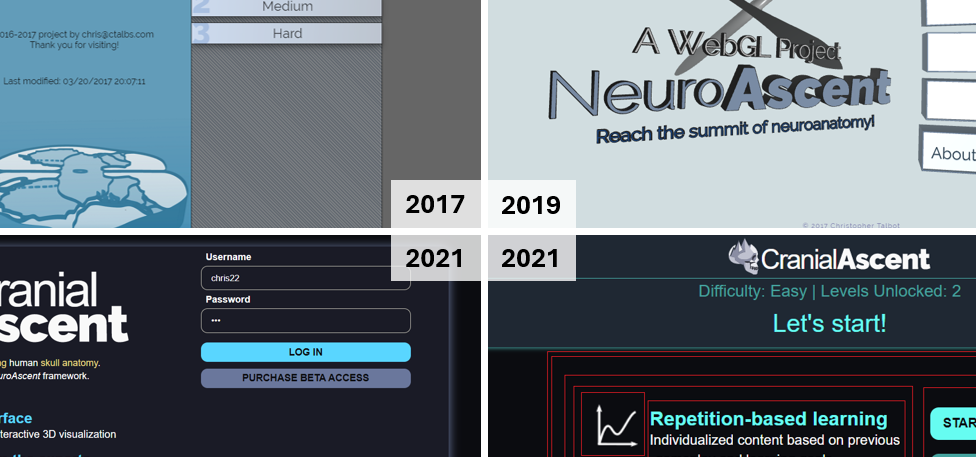
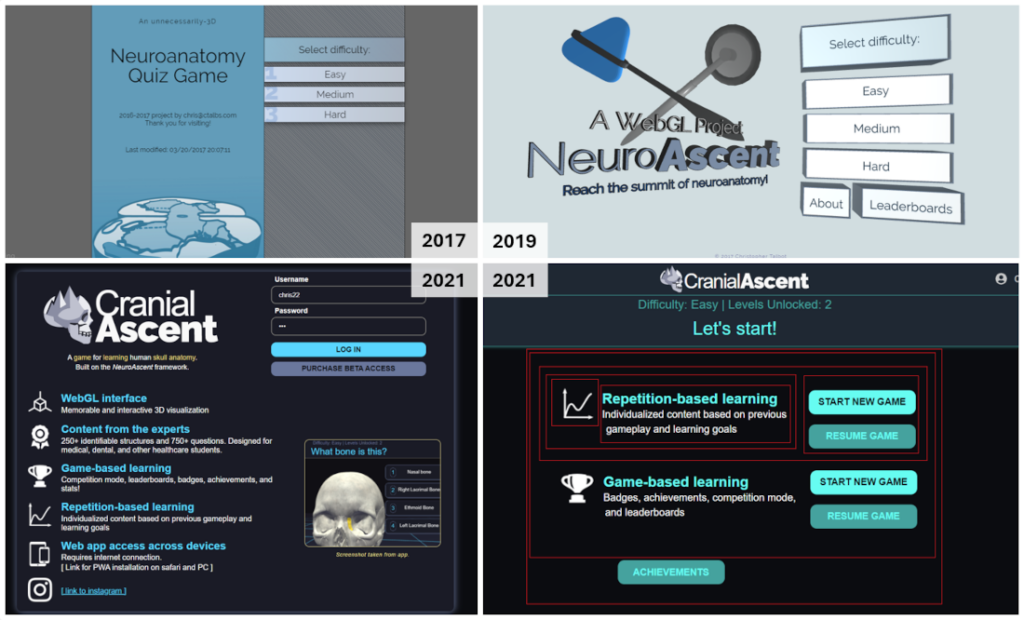
NeuroAscent began as a simple idea born from personal frustration with existing neuroanatomy learning tools. What started as a basic JavaScript quiz application has gradually evolved into an interactive learning platform. While still very much a work in progress, each iteration brings improvements to help students engage with this challenging subject matter.
The technical journey has been a continuous learning experience. Moving from a simple frontend prototype to implementing Python, Redis, and MySQL has pushed me well beyond my initial programming knowledge. Each new feature has presented its own challenges, from database design to user authentication, but tackling these obstacles has helped create a more effective learning tool.
Visual Evolution: Beyond Basic Design
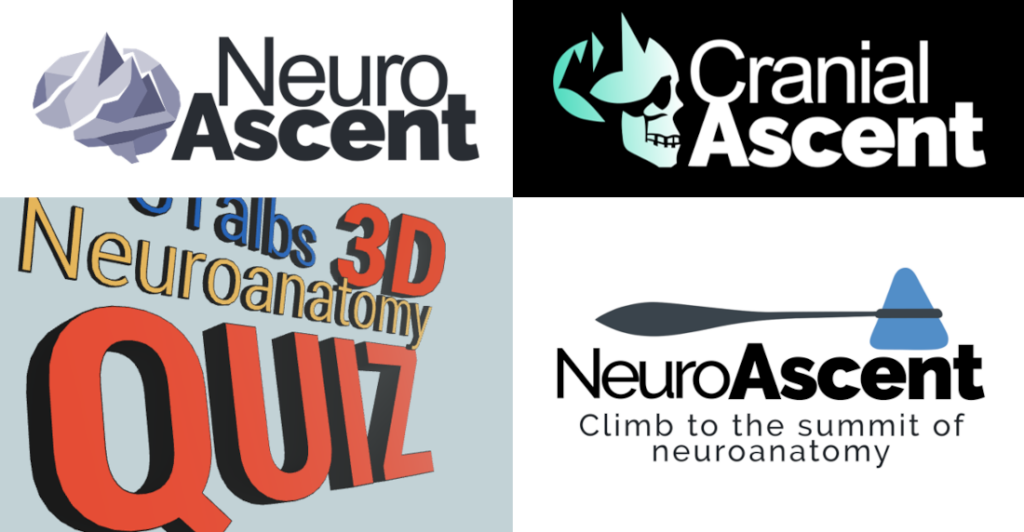
A key focus in 2024 has been enhancing the overall aesthetic of NeuroAscent. User feedback highlighted the need for a more cohesive visual experience across the platform. We’ve implemented dynamic CSS solutions to better handle different screen sizes and orientations, making the interface more adaptable for mobile users. While there’s still room for improvement, we’re pleased with how the responsive design has progressed.
The site-wide dark theme was a conscious choice, helping reduce eye strain during long study sessions and improving battery life on mobile devices. This darker palette also creates better contrast for our anatomical models and educational content. Through iterative testing and user feedback, we’ve refined these visual elements to better serve both practical and educational purposes.
Reimagining User Flow
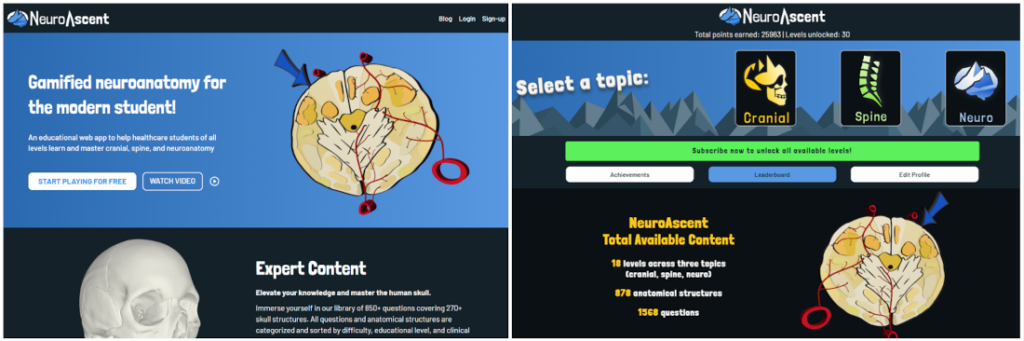
The way users navigate through NeuroAscent has been restructured based on valuable community feedback. We’ve developed a more intuitive flow that guides users from the main menu through topic selection, difficulty settings, and into gameplay. The new level metadata screen provides helpful context about progress and available content before starting a session.
These improvements came from studying how users actually interact with the platform. Learning about UX principles has helped inform decisions about menu organization and button placement. For instance, we noticed users wanted quick access to their progress statistics and achievement tracking, so we’ve made this information more readily available. While we continue to identify areas for improvement, these changes have made the platform more user-friendly and purposeful.
Gamification: Engaging Neuroanatomy Learners of All Levels
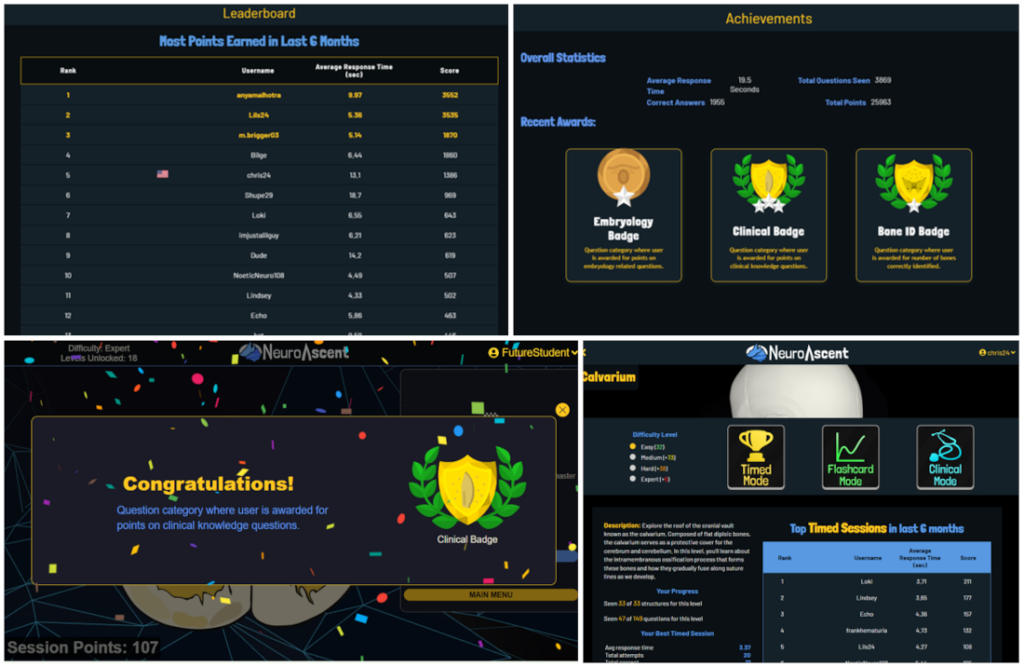
Making neuroanatomy engaging through game elements has been a core goal of NeuroAscent. Our approach combines educational psychology with game design principles to create a more effective learning environment. The platform leverages natural human desires for achievement, competition, and community engagement through carefully implemented features.
In 2024, we’ve expanded our achievement system and enhanced competitive elements. Users earn achievement badges that recognize mastery in specific areas – from basic identification tasks to complex clinical correlations. The leaderboard system encourages friendly competition while fostering a sense of community among learners.
Behind these features lies a points system integrated with our spaced repetition algorithm. This combination helps optimize the timing of content review while rewarding consistent engagement. Users receive more points for maintaining longer study streaks and tackling more challenging content, creating a balance between achievement and effective learning patterns.
Growing Together: A Community-Driven Project
The development of NeuroAscent continues to be shaped by its users. Each piece of feedback from 2024 has helped identify areas for improvement, from small interface tweaks to new feature requests. This community input has been invaluable in prioritizing development efforts and understanding how students actually use the platform.
While we continue to work through occasional technical challenges, the growing engagement from students and educators is encouraging. Seeing users progress through increasingly complex neuroanatomy concepts motivates us to keep refining and expanding the platform’s capabilities.
Looking ahead, we remain committed to our original goal: creating accessible, engaging tools for neuroanatomy education. As we continue to develop new features and content, we’re grateful for every bug report, suggestion, and piece of feedback that helps make NeuroAscent more useful for our learning community. Sign up now to make a free account now and join our community of neuroanatomy learners and enthusiasts!